
Secrets of the Pyramids How Ancient Egyptians Built the Impossible
For thousands of years, the Pyramids of Giza have stood as one of humanity’s greatest mysteries. Rising from the desert with near-perfect precision, these monumental structures continue to inspire awe, curiosity, and endless debate.
Introduction
For thousands of years, the Pyramids of Giza have stood as one of humanity’s greatest mysteries. Rising from the desert with near-perfect precision, these monumental structures continue to inspire awe, curiosity, and endless debate.
How did an ancient civilization—without modern machinery—manage to build such colossal and mathematically precise monuments?
In this article, we uncover the secrets of the pyramids, exploring the engineering genius, human effort, and scientific knowledge behind what many still consider “impossible.”
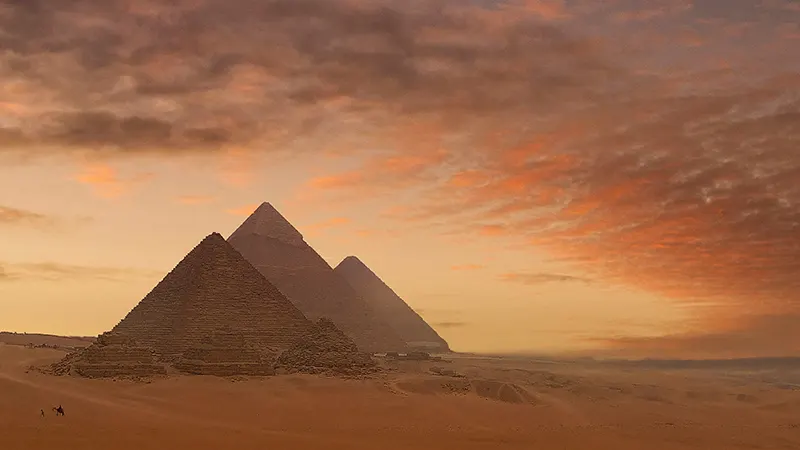
The Great Pyramid: A Marvel Beyond Its Time
The Great Pyramid of Giza, built for Pharaoh Khufu, is the largest and most iconic pyramid in Egypt.
Originally stood at 146.6 meters
Built with over 2.3 million stone blocks
Each block weighs between 2 to 15 tons
Aligned almost perfectly with the cardinal directions
Even today, modern engineers admire its precision and durability, which has allowed it to survive for over 4,500 years.
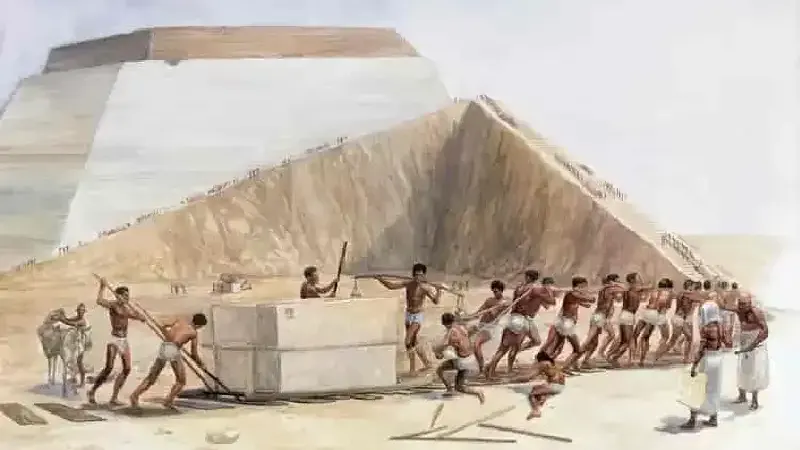
The Workforce: Not Slaves, But Skilled Builders
Contrary to popular belief, the pyramids were not built by slaves.
Archaeological discoveries near Giza reveal that:
Workers were paid laborers and skilled craftsmen
They lived in organized communities with food, medical care, and housing
Teams worked in rotating shifts, especially during the Nile flood season
This reflects a highly structured society capable of organizing large-scale national projects.
Engineering Genius: How Were the Stones Moved?
Engineering Genius: How Were the Stones Moved?
One of the biggest mysteries is how massive stones were transported and lifted.
Theories include:
Ramps System: Straight, zigzag, or circular ramps used to drag stones upward
Wet Sand Technique: Pouring water on sand to reduce friction when dragging blocks
Sledges and Rollers: Wooden sledges pulled by teams of workers
Internal Ramp Theory: Hidden ramps inside the pyramid structure
Recent studies suggest that a combination of these methods was likely used.
The Purpose: More Than Just Tombs
While pyramids served as royal tombs, they had deeper significance:
Represented the pharaoh’s journey to the afterlife
Symbolized a connection between earth and the divine
Demonstrated the power and unity of the Egyptian Kingdom
The pyramid shape itself may represent the rays of the sun, linking the pharaoh to the sun god Ra.
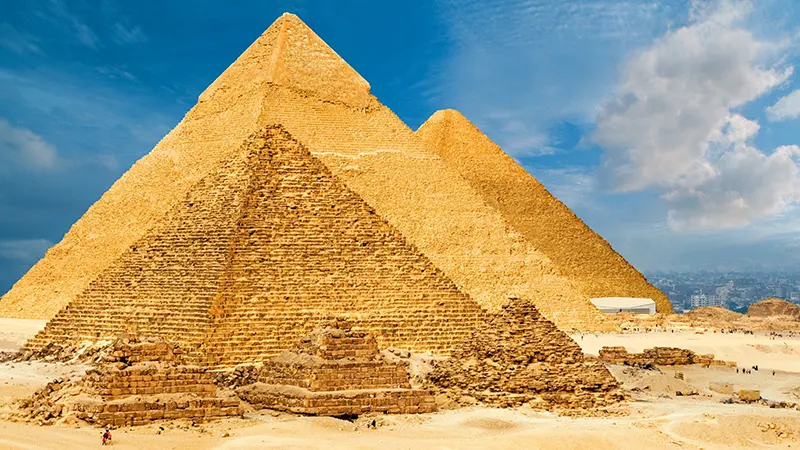
Modern Discoveries: Secrets Still Unfolding
Even today, scientists continue to explore new mysteries using advanced technologies:
Muon scanning has revealed hidden voids inside the Great Pyramid
Ongoing excavations uncover new details about workers’ lives
Digital reconstruction helps us understand construction techniques
The pyramids are not just ancient—they are still alive with discovery.