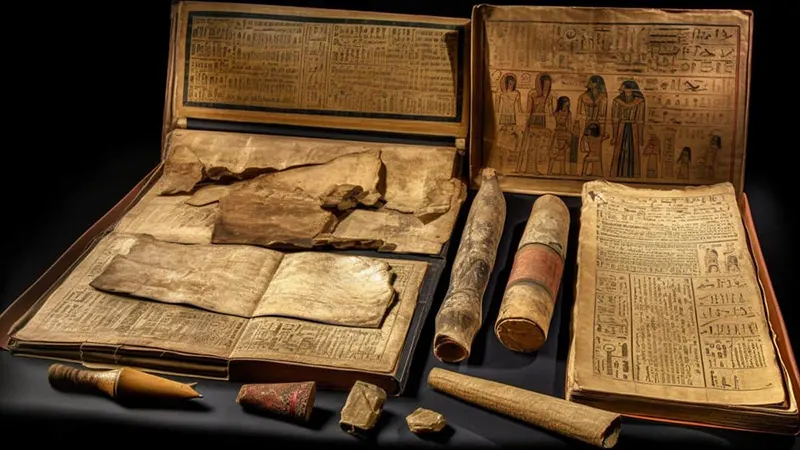
The Importance of Papyrus
Papyrus was one of the most significant inventions of ancient Egypt, playing a crucial role in preserving knowledge and shaping the course of human history. Long before paper existed, papyrus served as the primary writing material for recording events, laws, literature, and religious beliefs.
What is Papyrus?
Papyrus is a plant that grew abundantly along the banks of the Nile River. The ancient Egyptians developed a method to process its stalks into smooth sheets that could be written on. This innovation made writing more practical and portable compared to earlier methods like carving on stone.

A Revolutionary Writing Material
Papyrus transformed the way information was recorded and shared. Unlike stone tablets, papyrus was lightweight, flexible, and easy to store as scrolls. This allowed scribes to document large amounts of information efficiently.
Key advantages included:
Portability for travel and trade
Ability to create long documents and scrolls
Easier duplication and storage of texts

Preserving Ancient Egyptian Civilization
Preserving Ancient Egyptian Civilization
Papyrus played a vital role in documenting daily life and major historical events in ancient Egypt. Thanks to papyrus, historians today have access to detailed records about:
Government administration and legal systems
Religious texts like the Book of the Dead
Medical knowledge and treatments
Literature, poetry, and wisdom texts
Without papyrus, much of what we know about ancient Egypt would have been lost.
The Role of Scribes
Scribes were highly respected individuals responsible for writing and maintaining records. They used ink made from natural materials and wrote using reed pens on papyrus sheets.
Their work ensured that:
Taxes were recorded, Trade transactions were documented, Royal decrees were preserved, Historical events were accurately written down
Papyrus and Global Influence
The use of papyrus spread beyond Egypt to other ancient civilizations such as Greece and Rome. In fact, the word “paper” is derived from “papyrus,” highlighting its lasting impact on modern writing materials.
Papyrus became a key export product of Egypt, strengthening its economy and cultural influence across the Mediterranean world.